

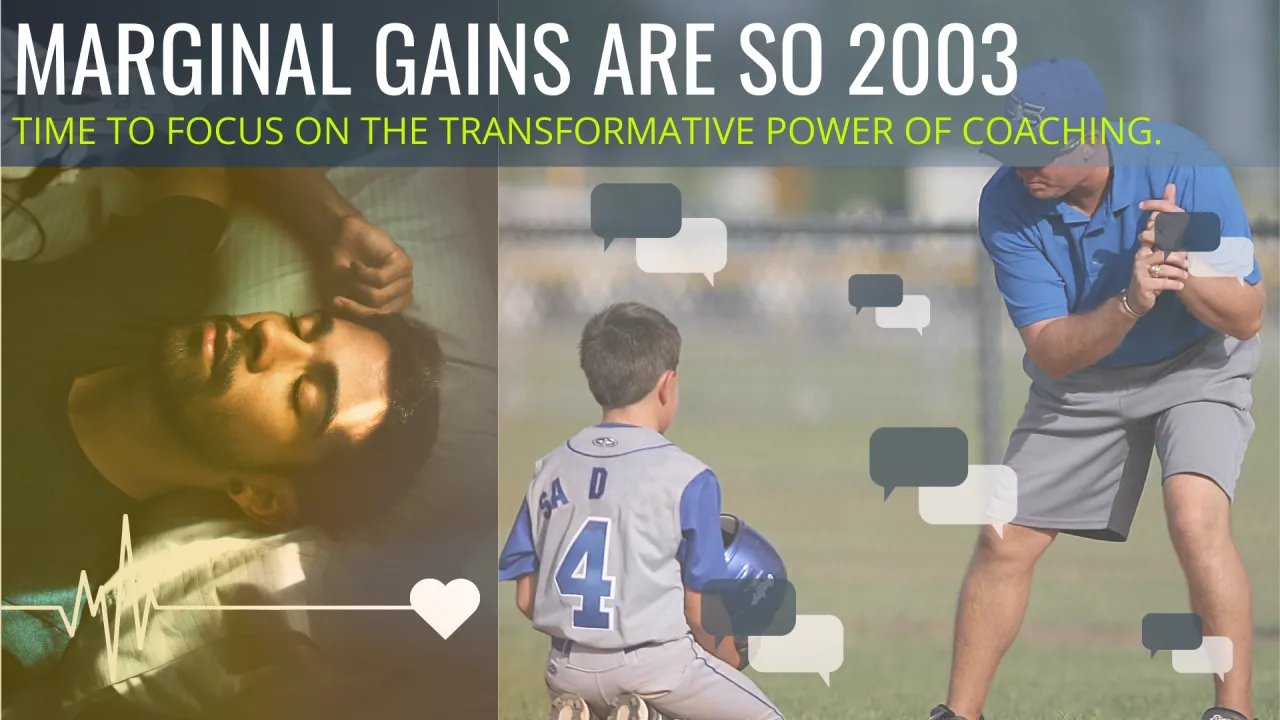
Marginal Gains are So 2003
Time to focus on the transformative power of coaching
In 2003, Dave Brailsford and the British Cycling team were credited with making "marginal gains" famous. The idea was simple: if you improve everything by 1%, the cumulative effect will be huge. It was a powerful idea, but it also carried an assumption: that there wasn't much left to improve in athlete performance, so the only way forward was to chase the smallest of details.
More than 20 years later, sport is still obsessed with those incremental gains; tracking nutrition, hydration, GPS data, heart rate, and sleep, even buying specialist pillows to squeeze out that extra half-percent in recovery.
But here's the irony: we still haven't properly tapped into the most transformative gain of all...developing coaches at all levels. If we obsess over a 1% gain from a pillow, how can we justify leaving coaching, the factor that shapes every athlete's learning and development, to chance?
My Experience With SAM
Over the past month or so, I've been writing about my own use of SAM (Session Analysis Model), and it's having a profound impact on my coaching.
I've always considered myself a reflective coach. I'd finish a session, replay key moments in my head, and often chat things through with peers. That felt like reflection. But what I've discovered is that I was missing a lot.
Recording my sessions and running them through SAM has opened my eyes to patterns and interactions I'd never have spotted otherwise. The balance of feedback, the way I phrase my questions, even the tone I use in adverse situations, SAM surfaces these in a way my memory simply can't.
And the big difference now is that I can share moments from the actual session with peers; a video clip, a graph, and a transcript. I'm no longer relying on vague descriptions, I'm providing fuller information and clearer examples. That means the feedback I get back is more precise, more useful, and ultimately more developmental.
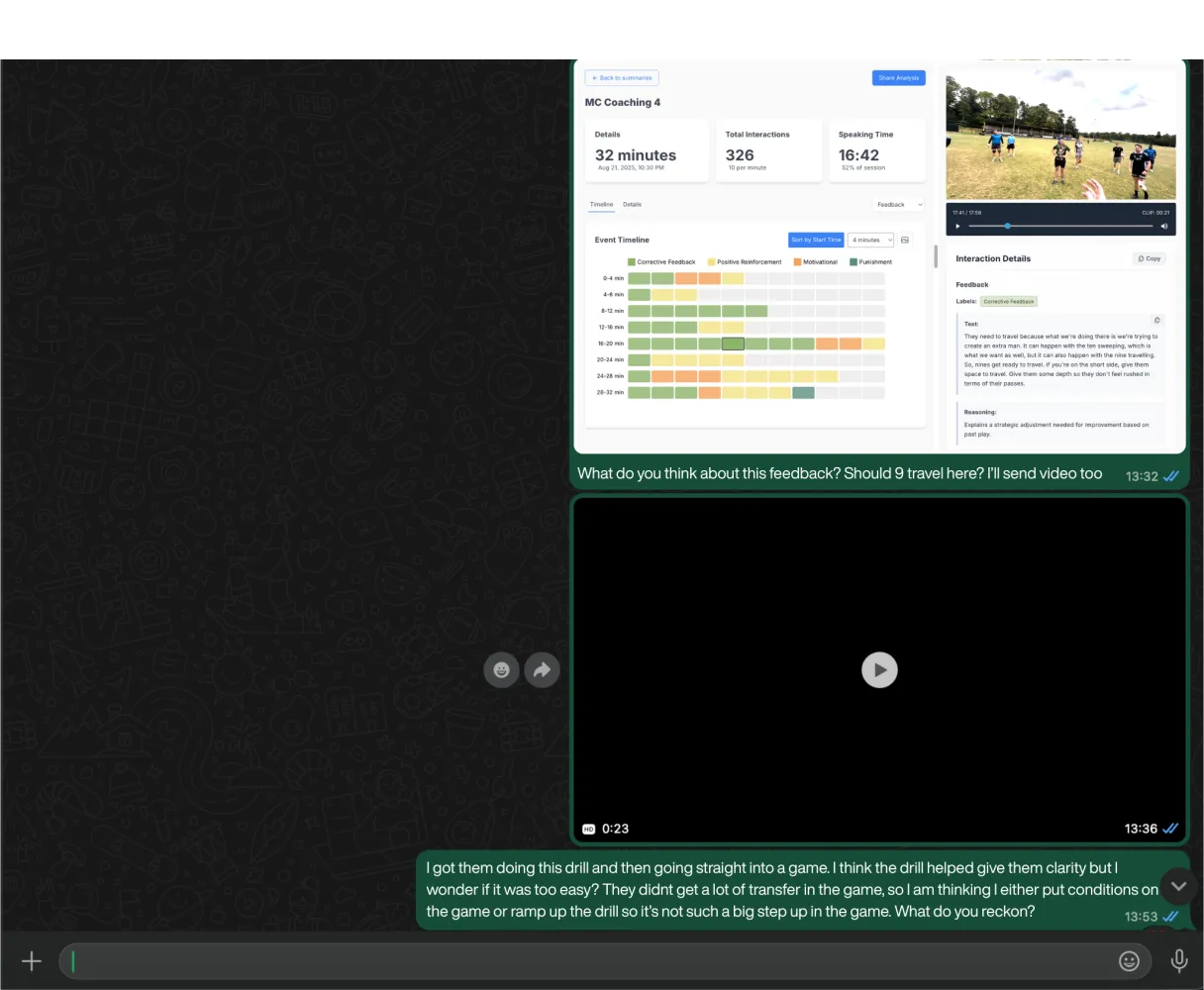
I'm just one coach. But if the impact SAM has had on me is replicated across many coaches, then the effect on athletes could be tremendous. And that's without any formal qualification or mentorship layered in; just better visibility, better conversations, and better reflection.
What's Being Measured, and What's Left to Chance?
The irony is clear. If we believe a pillow can have more impact on performance than a coach, then maybe we should get out of the athlete's way and let them sleep.
But we don't believe that. We know coaching is integral to athlete development. We also encourage young athletes to experience lots of sports, in different environments, with a range of coaches; because we believe diverse interactions shape more adaptable, resilient players and people.
So how do we square that circle? How do we reconcile the fact that we measure every heartbeat but rarely measure a coach's words, tone, and questioning style?
This oversight means we're neglecting crucial inputs that directly influence athlete well-being, learning, and performance.
Why Coaching Interactions Get Overlooked
The problem is simple: coach observation is hard and time consuming.
Traditionally, you need an expert with half a day just to observe a single coach. Multiply that across a Club, Academy, or Governing Body, and it quickly becomes impractical.
By contrast, tracking athletes is both easier and more fundable and crucially, this generally only happens at the elite level, where budgets exist and results justify the spend. Nutrition tracking, GPS units, and heart rate monitors are deployed because the costs can be controlled and the return on investment is visible.
The result? Sports organisations put their resources into monitoring elite players while coaching behaviours, especially at the grassroots levels, remain in the shadows.
The AI Opportunity Ahead
This is where SAM has been a game changer for me personally and why I believe it can be for sport more widely.
AI and Large Language Models (LLMs) can help make coaching observation scalable, objective, and ongoing. Instead of requiring a half-day from an expert, SAM can process a session in minutes and highlight the moments that matter.
If we truly believe coaching is integral, then it deserves the same rigour as any other performance factor. Not left to chance. Not left invisible. The biggest gains might be found in the conversations between coach and athlete.
The potential impact on performance by making coaching better is ridiculously huge. It's such a simple concept, and it's crazy it's only now being discussed, over 20 years since Brailsford's marginal gains. That's also what makes this moment so exciting we're right on the edge of what could be the biggest step change in how sport approaches development. And I'm lucky enough to be experiencing it first-hand.
The question now is: will we continue to obsess over marginal gains for elite athletes, or will we finally apply the same rigour to coaching itself to make sure the experience of all participants at all levels is optimised.