
I've been having conversations lately that have shifted how I think about SAM.
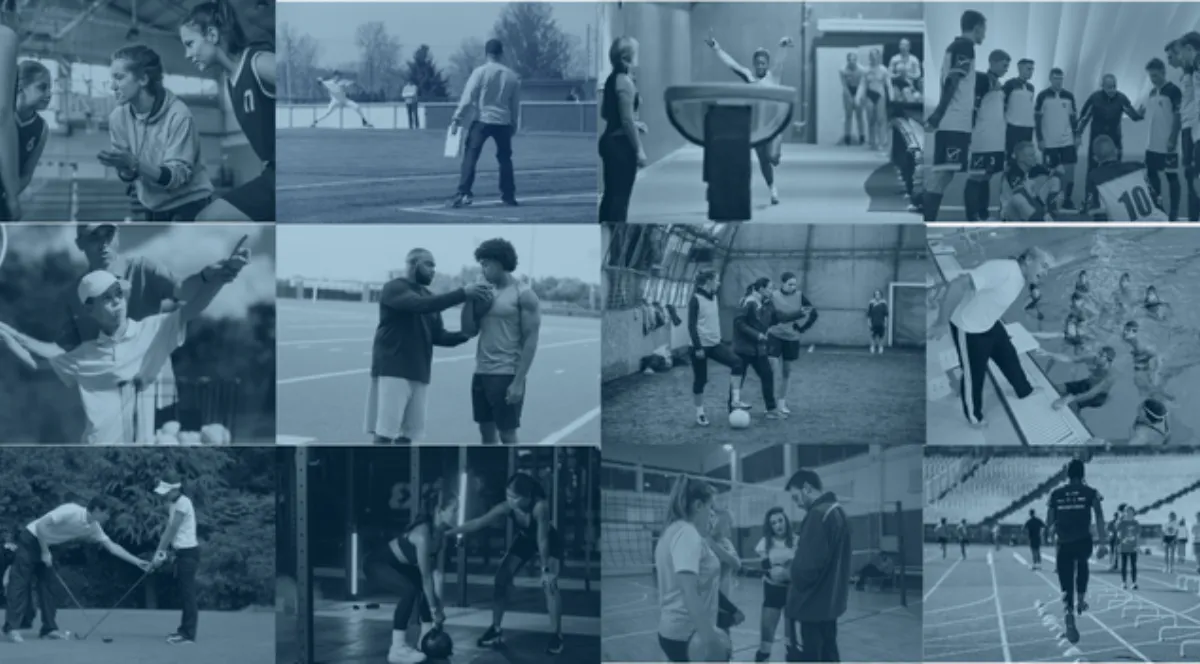
Not because of specific product feedback, but because of the variety of places it's ending up. Coach developers picking it up and finding uses we didn't anticipate. The same tool, the same behaviour categories, the same basic output; but many different sports, coaching challenges, and questions being asked of the data.
That was always the intention. SAM was built to be flexible and non-judgmental by design, not as an afterthought. The belief from the beginning was that the coach and the coach developer are the ones with the expertise, the creativity, and the contextual understanding. SAM's job is to give them better raw material to work with. If we'd built a tool that was designed for a specific environment and returned results with a verdict attached 'this is good coaching, this isn't', there would be no room for the human insight that makes coach development actually work.
A few examples of that in practice have been sitting with me.
"That's a lot of talk"
A coach developer described working with a coach who had a clear philosophy for the training week: high instruction early on, tapering off toward game day so players could take ownership before they competed. They believed it. They articulated it well. The coach developer had been watching this coach for weeks and wasn't so sure.
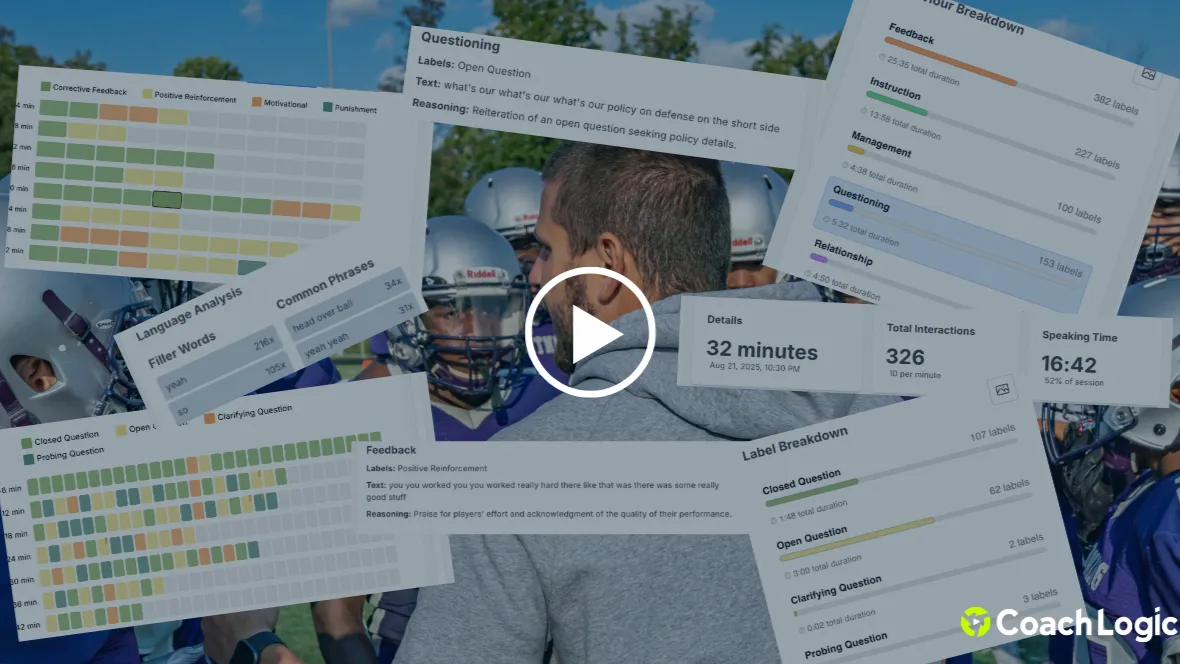
Rather than saying so, they ran three Friday sessions through SAM. Twenty minutes each. When the output came back, they showed the coach without commentary.
"What do you make of that?"
The coach looked at the instruction time. "That's a lot of talk."
"Yeah. What if we got it down to ten minutes? What would the players be doing with those two extra minutes?"
Probably problem-solving. That was the goal. The session that followed that conversation looked different.
SAM didn't tell the coach what good coaching looks like. It highlighted what their coaching actually looked like, and the coach developer opened the conversation from there. The data created the opening. The human took it from there.
When context changes everything
In some coaching environments, sessions run long. The environment is technically demanding. The coaching culture is demanding and high volumes of technical correction are the norm.
When a coach developer sat down with a coach from this environment to look at their positive-to-corrective feedback ratio, the coach's and coach developer's expectations were different. The coach had been working to shift their approach for some time, but had no real sense of how much ground had been covered.
The output showed a very high corrective to positive feedback.
So: what does that mean? Is say a 15:1 corrective to positive feedback a problem? In some coaching environments, yes. For this coach, in this context, it was evidence of genuine movement in the right direction. The number didn't make that judgment. The coach and coach developer did.
Same tool. Completely different interpretation. That's not a limitation of SAM. That's the design.
Cueing, not categories
Not every SAM session needs to be a full analysis.
One coach developer described working with a coach who had a very specific question: were they using internal and external cues effectively? The coach wasn't interested in their feedback ratio or the questioning time. They wanted to know whether the language used when coaching technical skill actually reflected what they understood about cueing.
Coaching video captured and uploaded. SAM surfaced the relevant moments. The coach developer came back with three strong examples of clear, well-chosen cues, and one moment where the coach had simply said something along the lines of "good job" when something more specific might have landed better.
That was the session. No dashboard deep-dive. Three moments and one question: "what else could you have said there?"
SAM supported the coach developer to find those moments and a ten minute conversation had a big impact.
Outside the training pitch
The coach's box during a match. Team meetings across the training week. Conversations between coaches rather than between coach and player.
These are harder for SAM right now. Voice separation is a genuine challenge when multiple people are in a room. Background noise, crowd noise, radio signals all add complexity. Some of that is improving. Denoising has come a long way in the last year.
But the interest in these contexts tells us something. Coach developers aren't only thinking about the training session. They're thinking about the coaching environment as a whole. What does the head coach communicate in the box during a match? How are team meetings structured? Are the right voices present and heard?
The question it raises is whether SAM's categories, developed for the training pitch, have some application in these settings too. The honest answer is, partially, and with care. What "instruction" looks like in a team meeting is different from what it looks like during a drill. What counts as "management" in a coach's box conversation is genuinely unclear. These are real edges of the tool's current design.
What's clear is that the patterns coaches are trying to understand i.e. who speaks, how often, what kind of language they use, whether they ask questions or give answers, exist in these settings just as much as they do on the pitch.
What this is telling us
The thread running through all of these examples is the same problem we built SAM to address. Coaches can't see themselves coach. A coach educator asked me recently, looking at SAM for the first time:
"How does it decide what good coaching looks like?"
It doesn't. That's not what it's for.
SAM surfaces the pattern. The coach developer, the mentor, or the coach themselves brings the context. A high corrective-to-positive ratio might be a significant concern in one environment. In another, it's evidence of real progress. Twelve minutes of instruction out of twenty might be fine at the start of the week. By Friday, the same coach thinks it should be eight.
This is why flexibility and non-judgment aren't just features, they're what creates the space for human creativity. If SAM returned a score, or flagged something as good or bad coaching, the coach developer's job becomes responding to that verdict. Instead, it's starting a conversation from a position of actual evidence. What the coach does with that evidence, how they use it, what questions they ask, which moments they decide to focus on. That's where the skill is. That's where the innovation happens. SAM just has to be useful enough to get out of the way.
The more varied the contexts it ends up in, the more confident I am that that design decision was the right one and that's really satisfying.